About this Target
Tidal provides loudness-normalization controls but does not currently publish a numeric mastering requirement; -14 LUFS is a working playback reference.
Tidal can normalize playback volume, and listeners can change normalization behavior. The public support material does not define -14 LUFS as a submission requirement. This page therefore treats -14 LUFS and -1 dBTP as a practical comparison reference for a high-quality stereo master, not a guaranteed playback level or delivery specification.
Reference type: Working playback reference
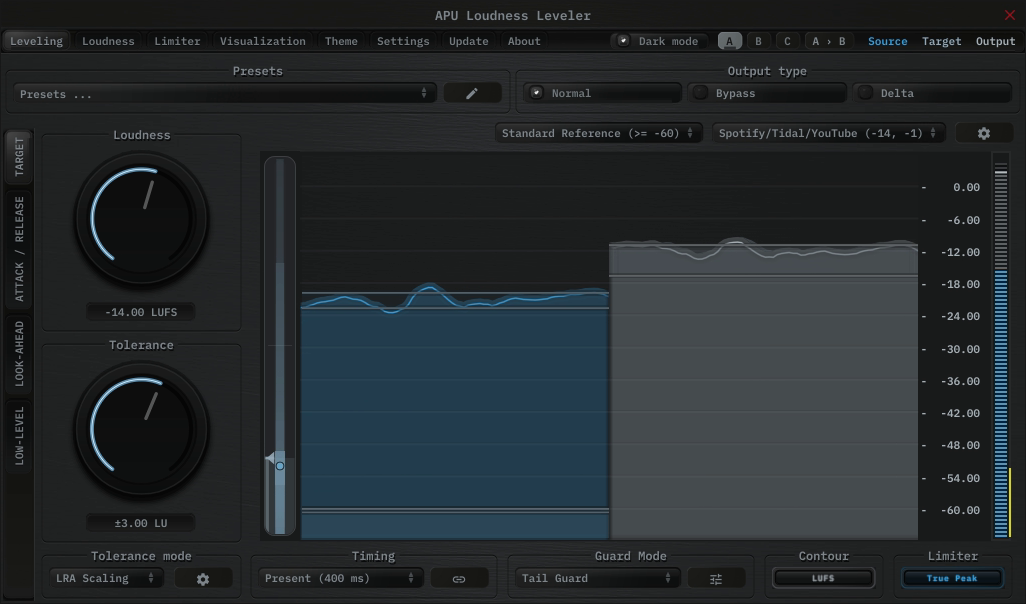
Guide: Loudness Leveler
Load the Mastering - Tidal Reference (Stereo) preset from the Purpose category. After the other settings are final, run Compensation Learn over the complete program to lock the final correction.
Adjust Target Tolerance for the amount of movement you want around -14 LUFS, then use the built-in limiter for the -1 dBTP ceiling.
Guide: Loudness Compressor
Workflow:
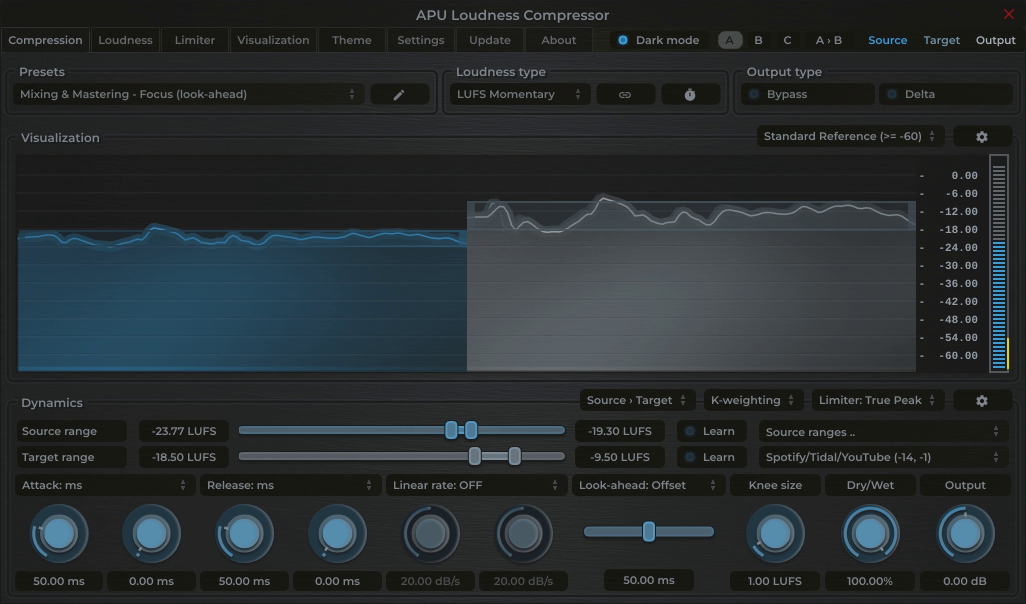
1. Load the Mastering - Tidal Reference (Stereo) preset from the Purpose category.
2. To have the compression range follow your material, use Source Range Learn while playing the complete program.
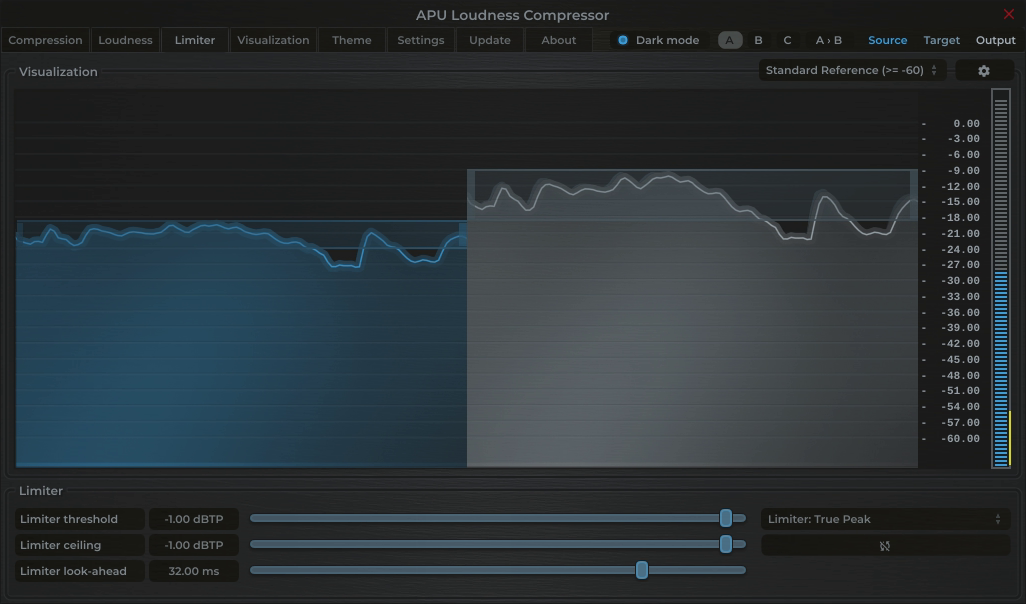
3. After the other settings are final, run Compensation Learn in the Limiter tab over the complete program.
Guide: Loudness Limiter
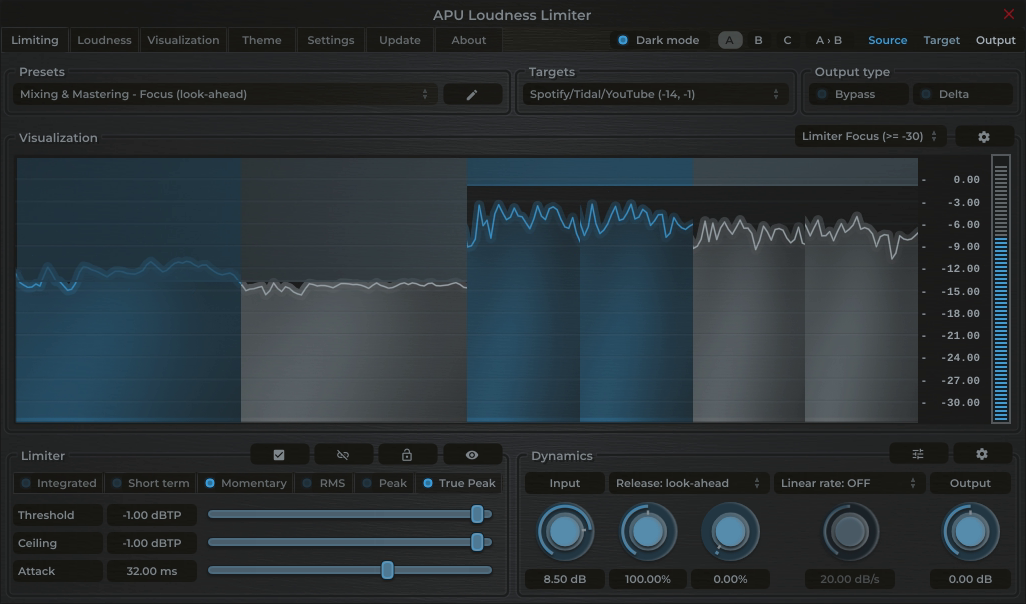
Load the Mastering - Tidal Reference Ceiling (Stereo) preset from the Purpose category. It configures both ceilings. After the other settings are final, run Compensation Learn over the complete program.
Guide: Dynamics Optimizer
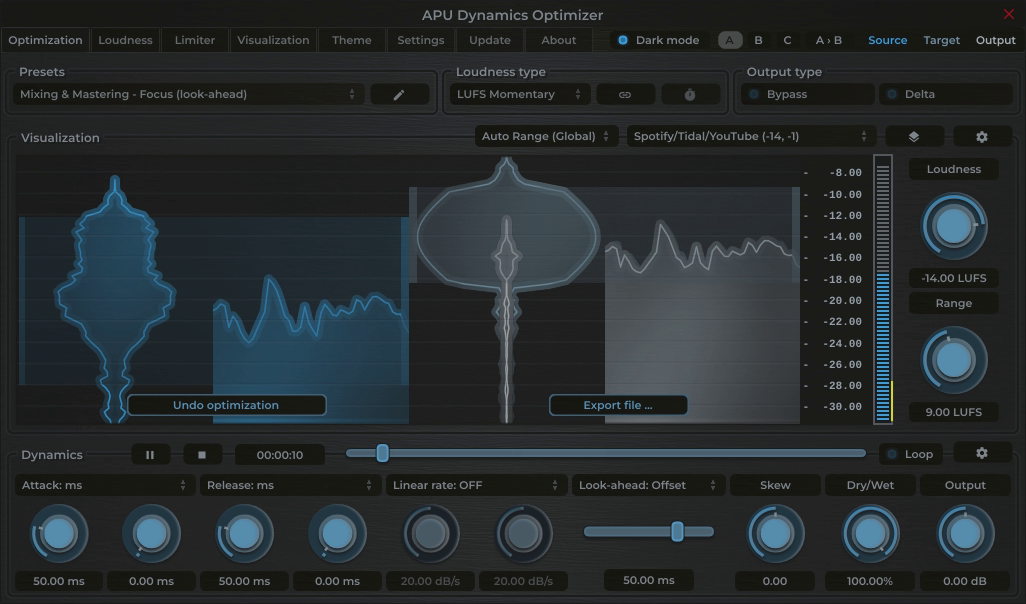
Load the Mastering - Tidal Reference (Stereo) preset from the Purpose category, open the complete file, then analyze and optimize it. Review the result, then measure the exported file before delivery.
Metering for Tidal
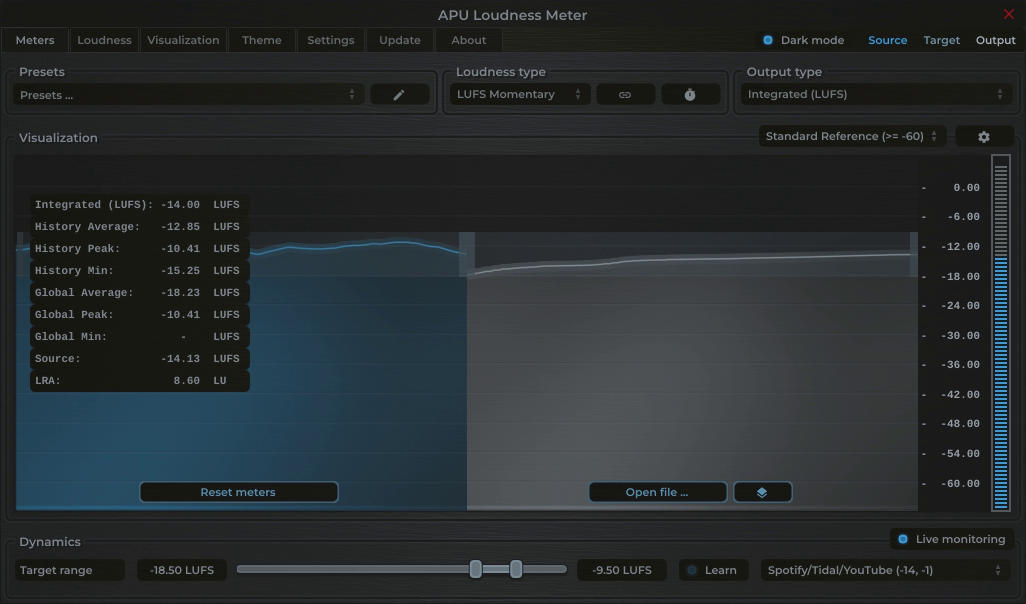
Measure complete-track Integrated LUFS and linked Maximum True Peak. Use the reference to compare masters while preserving the artistic balance and enough headroom for encoding; do not treat an exact number as a Tidal acceptance gate.
Load the QC - Tidal Reference (Stereo) preset from the Purpose category. It configures the target range, True Peak threshold, Short-term history, and Integrated output for this reference.
Sources
Platform behavior and delivery requirements can change. Check the linked source and the destination's current specification before final delivery.